12 Aug 2026
Session Timing Data Refines Progressive Reward Allocation in Hybrid Gaming Platforms
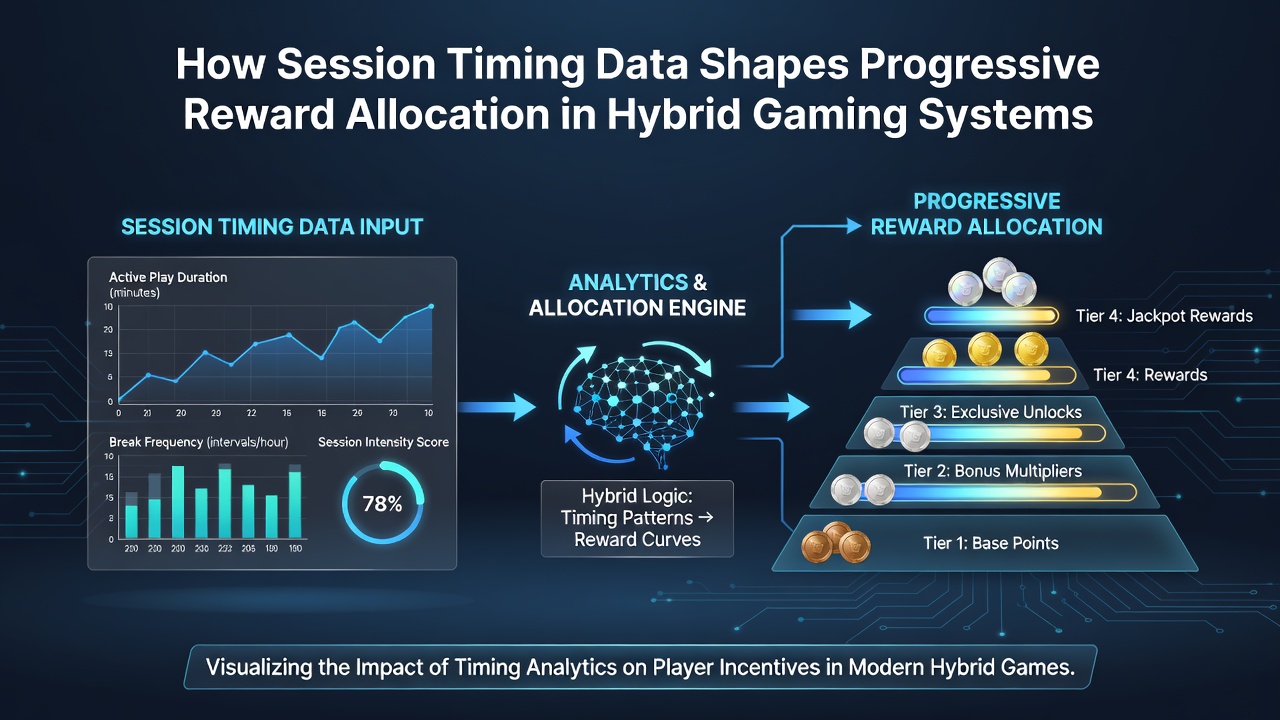
Hybrid gaming systems combine online and land-based elements where session timing data tracks player engagement periods from login to logout or from machine activation to cashout, and this information feeds directly into algorithms that adjust progressive reward pools. Researchers at institutions focused on gaming analytics note that shorter sessions often correlate with lower allocation rates to major jackpots while extended play periods trigger incremental increases in contribution percentages toward community prizes.
Data Collection Methods Across Platforms
Operators gather timing metrics through server logs that record precise start and end points for each player interaction, and these logs integrate with player account systems to build profiles segmented by duration categories such as under fifteen minutes, thirty to sixty minutes, or over two hours. In August 2026 several European regulatory frameworks updated reporting standards that require disclosure of how timing variables influence reward distribution, which prompted developers to refine their data pipelines for greater transparency without altering core mechanics.
Systems process these intervals in real time using machine learning models that weigh factors including average session length per user cohort, frequency of returns within twenty-four hours, and peak activity windows, then they apply weighted multipliers to progressive meters accordingly. Observers note that this approach allows platforms to maintain fairness across diverse player behaviors while optimizing the rate at which rewards accumulate.
Algorithmic Integration of Timing Variables
Progressive reward pools receive contributions from each bet placed, yet timing data modulates the exact percentage directed to each tier, so a player whose session exceeds the median length by twenty percent might see their contribution rate rise from 0.5 percent to 0.75 percent during that period. Experts from the National Indian Gaming Commission have documented similar patterns in tribal gaming environments where session analytics help balance land-based and digital reward streams within the same network.
Models further segment data by game type, distinguishing between high-volatility slots and lower-variance table hybrids, because timing patterns differ markedly between these categories, and allocation formulas adjust thresholds to prevent disproportionate growth in any single pool. One study released by academic researchers at the University of Nevada Reno examined over 1.2 million sessions and found that incorporating duration metrics reduced variance in jackpot hit rates by approximately 12 percent compared with static contribution models.
Impact on Player Retention and System Balance
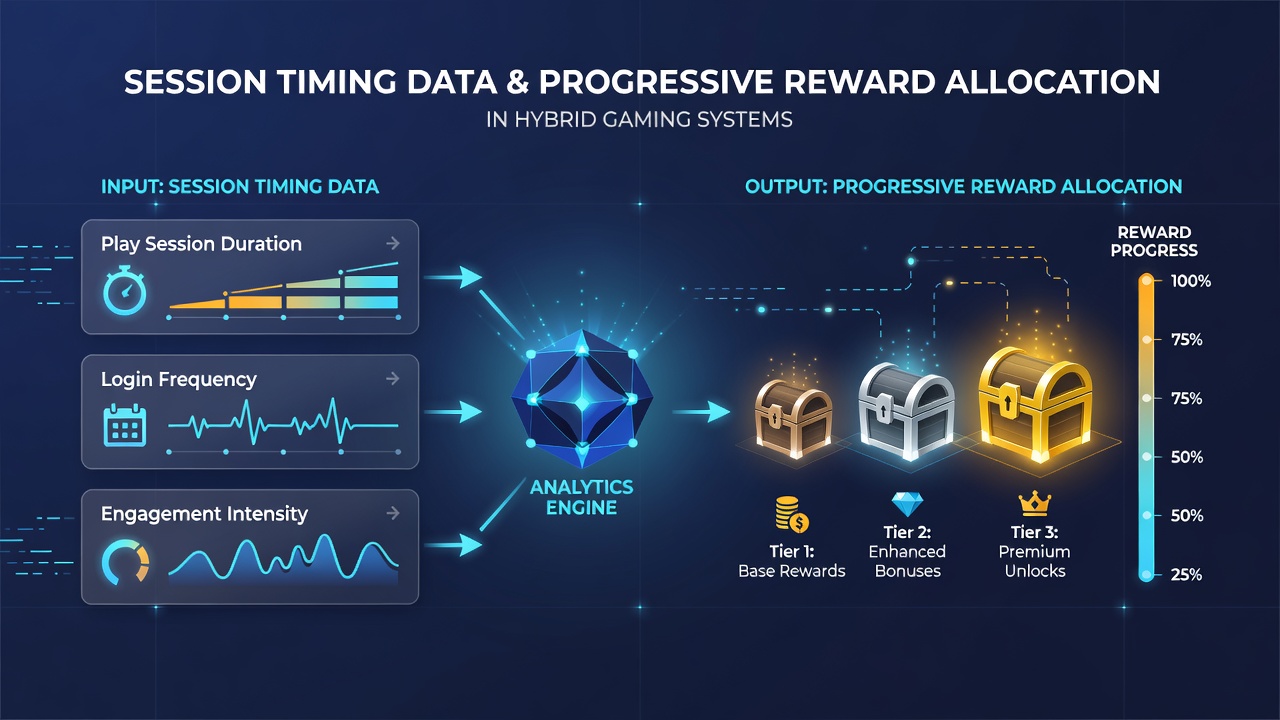
Platforms apply timing-derived adjustments to encourage balanced participation across different session lengths, which in turn stabilizes the overall progressive ecosystem by preventing rapid depletion during short-burst activity spikes or stagnation during prolonged low-engagement periods. Data from the Australian Communications and Media Authority indicates that operators using these refined models reported steadier growth in aggregate reward pools throughout 2025 and into mid-2026.
Hybrid environments benefit particularly because timing signals from physical venues can synchronize with online sessions through unified player accounts, allowing cross-platform rewards to scale based on combined engagement duration rather than isolated interactions. This synchronization relies on encrypted timestamp exchanges that maintain compliance with regional data protection rules while preserving the integrity of allocation logic.
Future Developments and Regulatory Considerations
Developers continue to test predictive models that forecast session extensions based on early timing signals, enabling proactive reward scaling before a player reaches typical exit points. Such advancements depend on ongoing validation against historical datasets to ensure that changes do not inadvertently favor one demographic over another.
Industry associations including the European Gaming and Betting Association have begun publishing guidelines that emphasize auditable timing algorithms, and these recommendations encourage third-party verification of how session data translates into reward percentages across jurisdictions. As hybrid systems expand, the precision of timing integration remains central to maintaining equitable progressive structures.
Conclusion
Session timing data provides measurable inputs that directly shape progressive reward allocation formulas in hybrid gaming platforms through segmented analysis, real-time modulation, and cross-platform synchronization. Continued refinement of these methods, supported by regulatory updates and academic validation, sustains system stability while accommodating varied player engagement patterns observed through 2026.